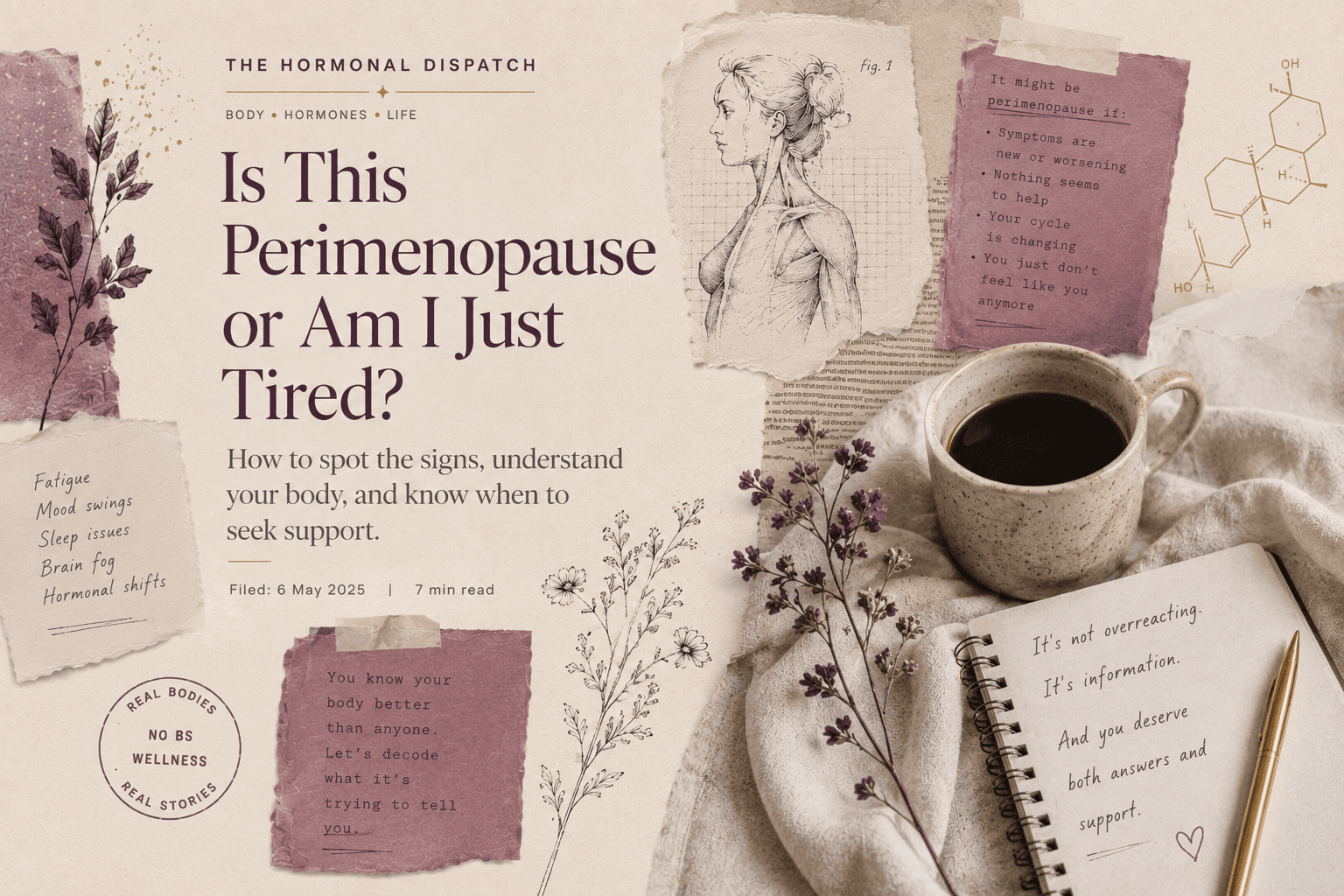
You went to bed tired. You woke up tired. By lunchtime, your brain is loading one word per calendar quarter.
Then your period arrives early. Or late. Or with the dramatic force of a cancelled festival. Your sleep becomes unreliable. Your temperature settings become fictional. Suddenly, ordinary tiredness starts looking suspiciously hormonal.
Perimenopause can cause fatigue directly. It can also create the perfect exhaustion casserole through night sweats, insomnia, mood changes, heavy bleeding and relentless sleep disruption.
“Perimenopause fatigue rarely travels alone. It usually arrives with several loud, inconvenient colleagues.”
However, fatigue is not a hormonal fingerprint. Iron deficiency, thyroid problems, sleep apnoea, depression, infection, diabetes and medicines can produce an almost identical mess.
The Hormone Department
Why perimenopause can leave you completely knackered
During perimenopause, hormone levels fluctuate. Symptoms can shift across weeks, cycles and occasionally the same bloody afternoon.
Sleep gets mugged first
Hot flushes and night sweats can wake you repeatedly. Anxiety may make falling asleep harder. Some women wake early and cannot return to sleep. Others sleep eight hours and still feel unrested.
Heavy periods can drain iron
Perimenopause can bring heavier or longer bleeding. Heavy blood loss can lower iron and cause fatigue, weakness, breathlessness, headaches or dizziness.
Brain fog makes everything heavier
Poor concentration and slower recall increase mental effort. Simple tasks become administrative marathons. That cognitive load can feel physically exhausting.
Pattern Recognition
Clues your exhaustion may be part of perimenopause
One symptom proves very little. A changing pattern tells a stronger story.
- Your periods are becoming irregular, heavier, lighter, longer or shorter.
- You have new hot flushes, night sweats or sudden temperature changes.
- Sleep problems appeared alongside cycle changes.
- Brain fog, forgetfulness or poor concentration feel new or noticeably worse.
- Your mood, anxiety or irritability has changed without an obvious explanation.
- Headaches, migraines, palpitations, joint aches or itchy skin have joined the circus.
- Vaginal dryness, urinary changes or lower libido appeared around the same time.
The timing matters. Symptoms arriving together during your forties deserve a perimenopause conversation. They do not deserve an automatic stress lecture.
The Differential
Several conditions can wear the same cheap disguise
Blaming every symptom on hormones is just dismissal wearing activewear. Fatigue deserves a wider look.
- Iron deficiency or anaemia, especially with heavy periods.
- An underactive thyroid or another hormonal condition.
- Insomnia or obstructive sleep apnoea.
- Depression, anxiety, grief or prolonged stress.
- Diabetes or unstable blood glucose.
- Recent infection, including COVID-19 or glandular fever.
- Medication effects, including sedating medicines.
- Pregnancy, where biologically possible.
- Heart, kidney, autoimmune or other medical conditions.
This does not mean something terrible is lurking. It means fatigue is a symptom, not a final diagnosis.
Myth File
A normal hormone test does not automatically clear perimenopause
Case Notes
Bring a pattern, not seventeen screenshots and a haunted expression
Appointments are short. Your symptom history should do some heavy lifting.
- Record period dates, duration, heaviness, clots and bleeding between periods.
- Track fatigue daily using a simple zero-to-ten scale.
- Note sleep length, night waking, snoring, night sweats and morning exhaustion.
- Record hot flushes, brain fog, mood changes, headaches and palpitations.
- List medicines, supplements, contraception and recent dose changes.
- Write down when symptoms started and whether they follow your cycle.
- Note dizziness, breathlessness, weakness or reduced exercise tolerance.
Two to six weeks of notes can reveal patterns. You are collecting evidence, not completing a doctoral thesis.
Appointment Briefing
Ask for the whole picture, not another motivational speech
Start clearly. Say what changed, how long it lasted and how it affects daily life.
- Could this symptom pattern fit perimenopause?
- Could heavy bleeding be causing iron deficiency?
- Should we check a full blood count, iron studies or thyroid function?
- Could my sleep symptoms suggest insomnia or sleep apnoea?
- Do any medicines or supplements contribute to fatigue?
- Which treatment options address my most disruptive symptoms?
- What should trigger follow-up or further investigation?
You do not need to prove unbearable suffering. Symptoms affecting work, sleep, relationships or safety already matter.
Do Not File Under Normal
Some symptoms need faster attention
Perimenopause is common. Medical emergencies remain medical emergencies. Hormones do not receive diplomatic immunity.
- Seek urgent care for suddenly very heavy bleeding, dizziness or marked weakness.
- Call emergency services for very heavy bleeding with fainting or near-fainting.
- Get urgent help for chest pain, severe breathlessness or new neurological symptoms.
- Discuss bleeding between periods, after sex or after menopause with a doctor.
- Seek prompt support for severe depression, suicidal thoughts or feeling unsafe.
- Book assessment when fatigue persists, worsens or disrupts normal functioning.
A changing cycle can be perimenopause. It should not become a blanket excuse for unexplained bleeding or severe exhaustion.
From The Editor's Desk
You are not lazy. Your body is sending paperwork.
Research Archive
Sources and further reading
- Australian Government Department of Health, Disability and Ageing
Perimenopause
- Australian Government Department of Health, Disability and Ageing
Symptoms of menopause and perimenopause
- Australian Government Department of Health, Disability and Ageing
Menopause and perimenopause myths and facts
- Healthdirect Australia
Fatigue
- Healthdirect Australia
Heavy periods
- National Institute for Health and Care Excellence
Menopause: identification and management