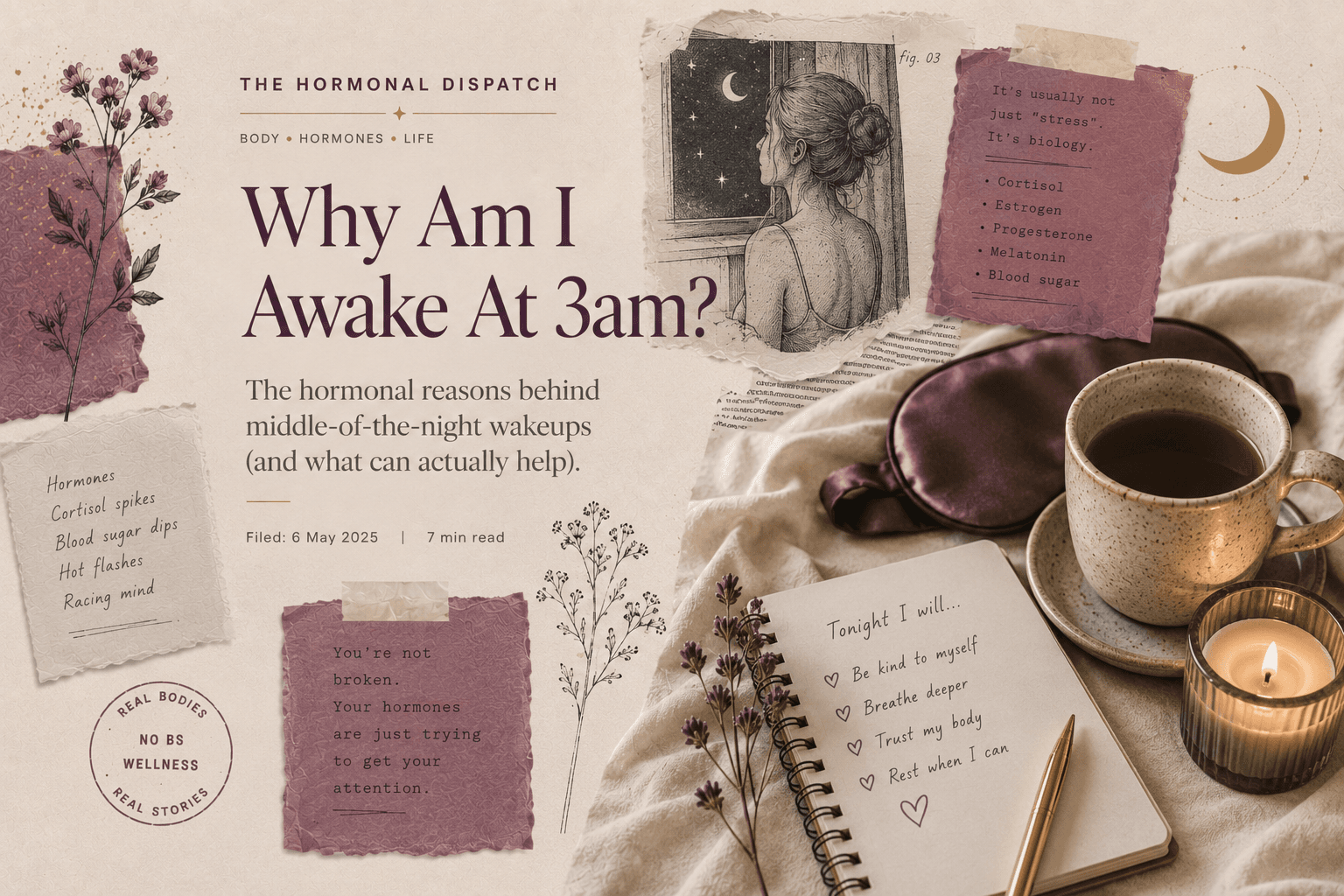
Waking during the night is common. Waking repeatedly, feeling overheated, anxious, alert, or completely unable to return to sleep deserves more than a dismissive shrug.
Sleep can become more fragile during perimenopause and menopause. Hormonal changes may contribute directly, while symptoms such as hot flushes and night sweats can provide their own extremely rude wake-up service.
Mood changes, pain, bladder symptoms, restless legs, snoring, alcohol, caffeine, medications, and ordinary life stress may also join the night shift.
“The exact clock time is not a diagnosis. It is a clue that something is interrupting your sleep.”
The Investigation · Report 01
Why does it always feel like 3am?
There is nothing medically magical about exactly 3am. Sleep naturally moves through repeated stages, and waking briefly between those stages is normal.
The problem begins when a symptom fully wakes you or your brain decides the brief interruption is an invitation to start producing minutes from every awkward conversation since 2008.
The Hormone File · Report 02
The hormonal suspects
Changing hormone levels during the menopause transition may affect sleep quality and temperature regulation.
Hot flushes and night sweats can cause awakenings, but women may also experience sleep problems without obvious vasomotor symptoms.
The Practical Desk · Report 03
What can genuinely help?
The useful treatment depends on what is waking you. Managing night sweats is different from treating sleep apnoea, chronic insomnia, pain, anxiety, or restless legs.
Start by tracking patterns. Record sleep timing, flushes, sweating, alcohol, caffeine, medications, pain, mood, cycle changes, snoring, and how you feel the following day.
Cognitive behavioural therapy for insomnia, usually called CBT-I, is an evidence-based treatment for persistent insomnia. Menopause treatments may also help when menopausal symptoms are driving the awakenings.
The Clinical File · Report 04
When should you raise it with a clinician?
Book an appointment when disrupted sleep is persistent, worsening, affecting work or daily life, or leaving you unsafe to drive or function normally.
Mention loud snoring, choking or gasping during sleep, restless legs, severe mood symptoms, pain, medication changes, night sweats, and any other symptoms that may help identify what is actually happening.