Your aunt reckons it causes cancer. A colleague swears it gave her life back. One headline says it prevents dementia, another says the opposite. Your mum's generation was told to avoid it, your GP seems cautious, and the women in the Facebook group are on first-name terms with their gels. If you've googled HRT lately, you've probably come out more confused than you went in.
No hype, no horror stories. Just what the evidence says, what changed in Australia in March 2025, what it costs, and how to work out if it's for you, with your GP, not with a blog post.
HRT or MHT?
HRT is the term you'll hear everywhere. Australian bodies like the Australasian Menopause Society lean toward MHT, menopausal hormone therapy, because it's not about "replacing" hormones to keep you thirty, it's therapy for symptoms. You'll also hear "body-identical," meaning the same molecule your ovaries made, versus older synthetic versions. Most modern MHT in Australia is body-identical. Both terms used here, since your pharmacist, the PBS and your aunt all just say HRT.
What it actually treats
MHT is the most effective treatment for many menopause symptoms, headline acts: hot flushes and night sweats. Around 3 in 4 women get these around menopause. It also improves bone density and cuts fracture risk, though that's rarely the reason it's prescribed, more on the long game in Beyond the Hot Flushes. It can ease joint and muscle aches for some. For vaginal and urinary symptoms, low-dose vaginal oestrogen is usually the better-focused option over whole-body therapy, full rundown in Vaginal Dryness, Painful Sex and UTIs.
Where the honest line sits: MHT treats symptoms. It's not recommended to prevent chronic disease, not heart disease, not dementia, nothing. And despite what you may have read, it's not recommended at any age for cognitive concerns or preventing decline. If brain fog is your main complaint, this isn't the answer for it.
The honest risks
With oral oestrogen, blood clot risk (VTE) sits around 5 in 1,000 women versus 2 in 1,000 on placebo, highest in the first two years. Real increase, small absolute numbers, and transdermal (patches, gels) carries a different risk profile from tablets, your GP will walk you through it. Your personal history matters enormously: clots, family history, smoking, blood pressure, weight, migraines. This is exactly why it's a prescription, not a purchase.
MHT is generally not prescribed for primary prevention of chronic disease. If anyone suggests it to protect your heart or dementia risk, that's outside what the evidence supports. And it's not a one-time decision, a plan that made sense at 47 deserves a fresh look at 55.
Bottom line: not "dangerous," not "harmless." Known benefits, known risks to weigh, honest limits on what it can do. Exactly what you want from any medicine.
What changed in March 2025
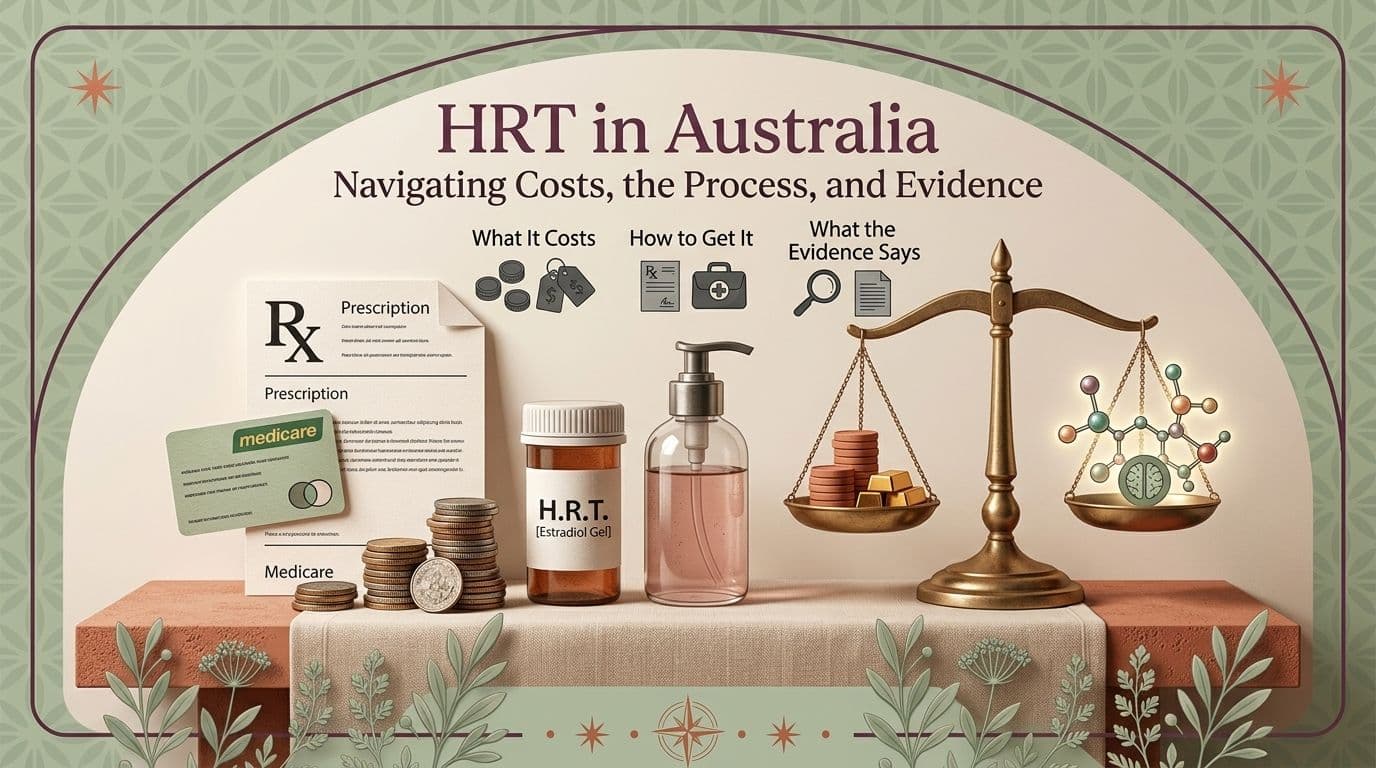
From 1 March 2025, three MHT products got PBS-subsidised for the first time: Estrogel, Estrogel Pro, Prometrium. First new MHT addition to the PBS in over twenty years. Before this, women were paying around $650 a year out of pocket. Now, concession card holders pay roughly $7 to 8 a month, general patients roughly $25 to 30 a month (check current figures at pbs.gov.au, these adjust yearly). That's roughly $300 to 360 a year for general patients, under $100 for concession holders. This followed the 2024 Parliamentary Inquiry into Menopause and Perimenopause. If you tried MHT years ago and stopped over cost, this is your sign to revisit it.
How to actually get it
Start with your GP, plenty confidently manage menopause care and consults may be bulk-billed. Blood tests usually aren't needed, diagnosis is clinical. Hormone panels ($80 to 200, possible Medicare rebate) are only for specific situations like suspected early or premature menopause. If someone offers you a pricey hormone panel as a starting point, question it.
Complex case? Private specialist consult typically $150 to 450, with a Medicare rebate around $88 for a first GP-referred visit. Find a menopause-informed doctor via the Australasian Menopause Society directory at menopause.org.au, or Jean Hailes, which offers telehealth too.
The cost picture
- GP menopause consult: may be bulk-billed
- Private specialist consult: $150–450, rebate ~$88 first visit
- Hormone blood panel (if needed): $80–200, possible rebate
- PBS-subsidised MHT (from March 2025): concession ~$7–8/month, general ~$25–30/month
If MHT's not for you, or not what you want
Both are completely legitimate positions. CBT-I for sleep, comparable to medication short-term with fewer side effects (full breakdown in Waking at 3am). CBT for mood, strong evidence in perimenopausal women (more in New Anxiety in Your 40s). Moisturisers and lubricants for milder GSM, prescription options if needed. Magnesium and creatine have the most promising supplement evidence, a conversation for your GP or pharmacist. None of this is "just putting up with it." These are evidence-based options in their own right.
How to decide
Three honest questions: How much are your symptoms affecting your life? (One in four women get severe symptoms, 69 per cent of Australian women 45 to 64 who've reached menopause are troubled by symptoms, over 40 per cent find daily activities harder.) What's your personal risk profile? What matters to you? There's no wrong answer, just a wrong way to decide, letting a twenty-year-old headline make the call for you.
Ask your GP: what are the benefits and risks for me specifically? Which type, dose, route, and why? How will we know it's working? How often will we review it?
One more thing: early menopause (40 to 45) or premature menopause (before 40) carries increased cardiovascular, anxiety and depression risk, and MHT may be recommended until around the average menopause age. About 1 in 5 women fall into these categories. If that's you, this is a conversation to have soon, not homework to shelve.
Track it: whether you're on MHT or deciding, track monthly: top 2 to 3 symptom severities 0–10, side effects, and what it's costing you. Starting MHT? Rate before your first dose, again at 6 to 8 weeks. That before-and-after tells you and your GP whether it's earning its keep.
Your action plan this week
- Rate your top three symptoms 0–10, that's your baseline
- Check the Australasian Menopause Society's Find a Doctor directory
- Book the appointment, bring your notes, ask why if blood tests are suggested as routine
- Know the numbers, MHT is now PBS-subsidised
- Ask the three questions above
The Appointment Evidence Pack walks you through the questions to ask and gets your priorities down on paper, so you walk into that appointment prepared instead of freezing the second you sit down.
Research Archive
Sources and further reading
- Australasian Menopause Society
Australasian Menopause Society, new PBS additions
- TreatCompare
TreatCompare, HRT cost in Australia
- RACGP
RACGP, postmenopause preventive activities
- Peer-reviewed research
oestrogen and dementia risk (research review)
- International Menopause Society
IMS 2022 White Paper
- Peer-reviewed research
CBT for insomnia in menopausal women
- The Menopause Society
The Menopause Society, MenoNote GSM
- The Conversation
The Conversation, supplements for menopause